Unheard Voices
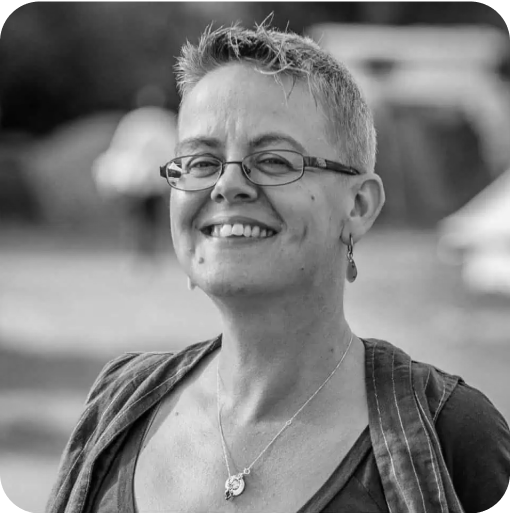
Theodora Wildcroft
July 20, 2026
IN SHORT
- So many yoga teachers struggle to find answers to questions other yoga teachers have already figured out
- A great deal of wisdom just disappears every time a yoga teacher quietly retires
- Bringing newly-qualified teachers into sharing relationships with experienced mentors can help everyone
I took a day off yesterday, and popped into my favorite café with George, my dog, to pick up a coffee for a leisurely walk. It has been a very, very busy week. Whilst waiting for my decaf to be made, I got talking to someone I’ve seen around our tiny town, but don’t really know. I talked about how well-behaved George was at my book launch in Oxford for Yoga Studies in Five Minutes, and the lady I was talking to revealed that years ago she’d been a yoga teacher.
In fact, for 20 years she’d specialized in leading yoga sessions for adults with profound disabilities and additional needs.
I thought I knew everyone in the area doing this kind of work, because when I was teaching regularly, I specialized in yoga for young people with similar conditions. And yet here I was, talking to a woman a little older than I, who I would have loved to have as a mentor when I started out. In fact, I’m sure there’s a lot we could teach each other if we shared notes even now.
I collected my coffee, exchanged pleasantries, and she took down the name of my book, which was nice of her. But this is something that happens to me far, far too often. It’s mostly older women, who taught yoga for decades, but then got a little tired of the late nights and the low pay and the physicality of it all, and quietly retired from teaching. They don’t ‘look’ like yoga teachers, and their former lives would rarely come up in conversation unless they happen to get talking to someone, like me, who writes about yoga teaching.
Does it matter? I think so. I think it matters quite a lot.
Firstly, there are so many yoga teachers struggling to find answers to questions other yoga teachers have already figured out. Outside of a few relationships between new teachers and the people who trained them, we don’t have a good mentorship culture in yoga, which is so odd for a profession that is built in and through practice. Training can only get you so far. It’s in the minutiae of actually teaching that you learn how to teach, issue by issue, student by student.
And speaking as a researcher into contemporary yoga, it bothers me greatly that fascinating life stories and a great deal of wisdom just disappears every time a yoga teacher quietly retires. We unpick, refashion and retell the life stories of prominent teachers and gurus over and over in our yoga schools and lineages, but do you know who is largely responsible for the idea of the ‘divine feminine’ in yoga?[1] Or who invented the sticky mat?[2] Or who was excommunicated from Iyengar Yoga so completely that they started running ‘un-teacher training courses’ in response?[3] Or who wrote the first and most complete how-to book on Anusara Yoga?[4]
If you’re more well known or you run a school yourself, you might leave a record in teacher training manuals or even write a book or two. But within a decade, even those are usually lost. It’s hard to document a living practice in a way that brings it to life for the people who come after you. And writing is not a skill everyone has – believe me! Students of Vanda Scaravelli or Sandra Sabatini used to transcribe their workshops just to have something to publish. And blog articles and social media posts like these are gone before you know it.
This is why, despite an abundance of yoga-related content all around us, we lose more of our history, more of our culture every time a yoga teacher retires from day-to-day teaching.
And the modern history of yoga has such riches to share. One under-researched aspect is the long and complex tradition of somatic approaches to yoga. I find it fascinating how many yoga teachers I have met or whose interviews I’ve heard who say something like – ‘For years I had a really disciplined asana practice until one day my body started to rebel and now my practice looks nothing like a vinyasa flow or hatha yoga class’.
They all go on to describe the same wriggling, rocking movements, and the same listening-to-your-body approach. It’s an approach that Angela Farmer and Victor van Kooten have been exploring for over 50 years. The same approach that Scaravelli and Sabatini taught. The same invitations to move and breathe as Diane Bruni was exploring before her untimely death. These traditions have always been entangled with yoga in the West, and if I had the time and the resources, I’d love to collect their stories.
Of course, age and experience aren’t everything. I think bringing newly-qualified teachers with experienced mentors will help everyone, especially if we are clear about what we are learning from whom. I can teach you more than you probably want to know about teaching profoundly disabled students, and of course I know a lot about the history and culture of yoga, worldwide, but if you want to know how to set up a viable yoga studio business, I think you should find someone else!
But in the meantime, I recommend you search out that yoga class that’s been going for decades in your community. The one that doesn’t advertise, and you only know about by word of mouth. Check it out while it’s still going. You might be surprised by what you learn.
[1] It’s Angela Farmer
[2] It’s Angela Farmer
[3] It’s Victor van Kooten…and Angela Farmer
[4] Okay this one’s Doug Keller
More posts about